
What is spondylolisthesis?
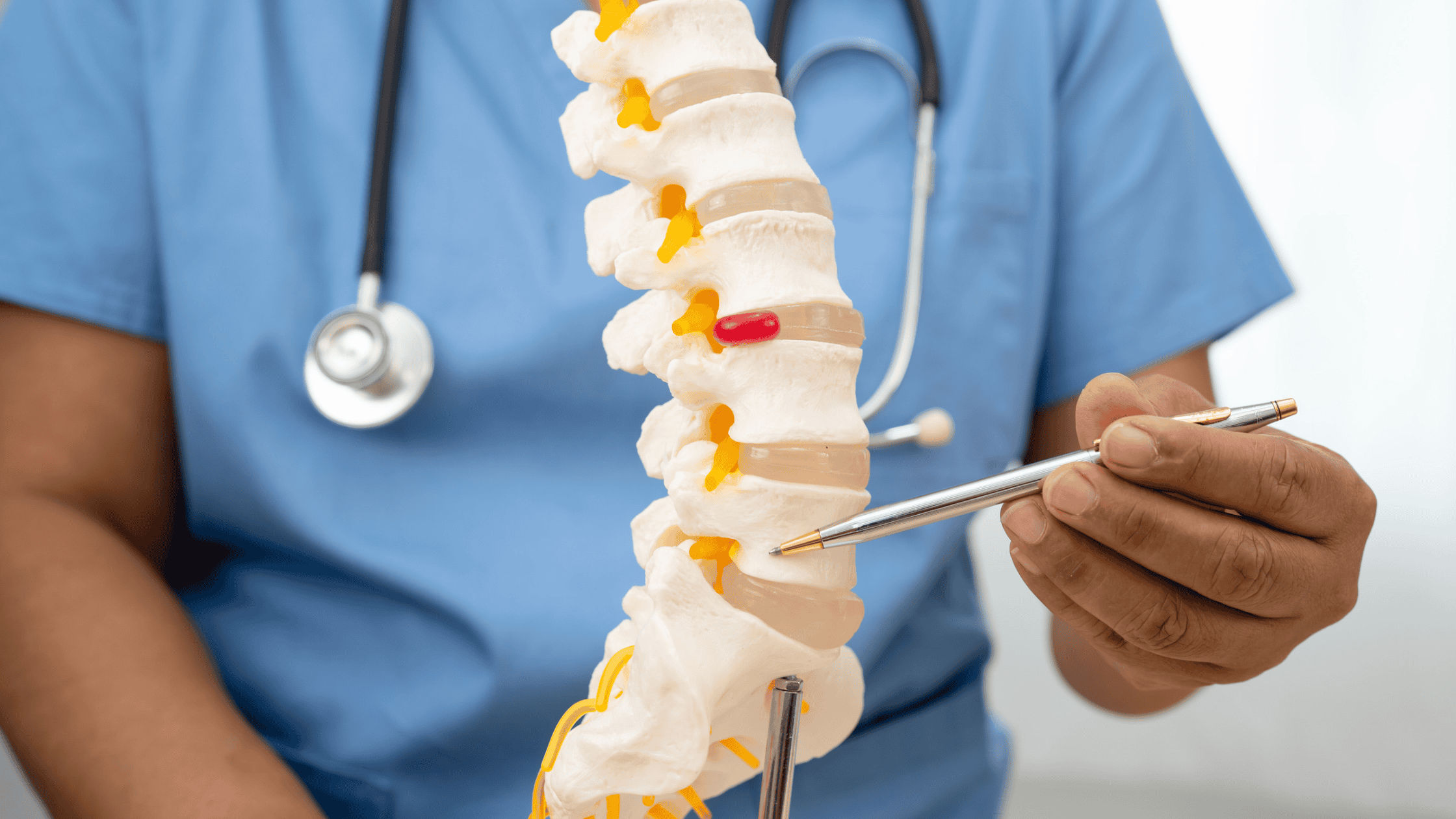
Spondylolisthesis is a spinal condition in which one vertebra shifts forward or backward in relation to the vertebra below it. Spondylolisthesis most often affects the lower back, or lumbar spine, and the degree of movement can range from minor to significant.
The condition does not always cause symptoms. However, when a displaced vertebra affects nearby nerves, joints, discs, or spinal structures, spondylolisthesis can contribute to lower back pain, stiffness, leg pain, numbness, or weakness.
What causes spondylolisthesis?
Spondylolisthesis can have several causes, and understanding the underlying cause can help determine the appropriate treatment. One common type, called degenerative spondylolisthesis, develops as the spinal discs and facet joints gradually wear down with age. As these structures lose their ability to stabilize the spine, one vertebra may shift out of alignment.
Another type, called isthmic spondylolisthesis, occurs when a small stress fracture develops in a portion of the vertebra known as the pars interarticularis. This type can develop during childhood or adolescence and may become symptomatic later in life.
Spondylolisthesis can also result from an acute injury, previous spinal surgery, congenital differences in spinal development, or conditions that weaken the bones.
What are the symptoms of spondylolisthesis?
Spondylolisthesis symptoms can vary considerably. Some people have no symptoms and discover the condition incidentally during an imaging test for another reason. Others develop persistent or worsening back and leg symptoms.
Common symptoms of spondylolisthesis include:
- Lower back pain
- Back stiffness
- Pain that extends into the buttocks or legs
- Numbness or tingling
- Leg weakness
- Tight hamstrings
- Difficulty standing or walking for extended periods
- Pain that worsens with certain activities
Symptoms may occur because the shifted vertebra places additional stress on spinal joints and surrounding tissues. In some cases, the vertebral shift can narrow the space available for spinal nerves, producing symptoms similar to sciatica.
Can spondylolisthesis cause nerve pain?
Spondylolisthesis can cause nerve pain when the vertebral shift contributes to narrowing around a spinal nerve. This narrowing, known as foraminal stenosis or spinal stenosis depending on its location, can irritate or compress nerves as they leave the spinal canal.
When nerves in the lower back are affected, symptoms may travel from the back into the buttocks, thighs, calves, or feet. Numbness, tingling, burning sensations, or weakness may accompany the pain.
The location and pattern of symptoms can provide important clues about which nerves may be involved. A comprehensive evaluation can help distinguish nerve-related symptoms from pain originating in the muscles, joints, discs, or other structures.
How is spondylolisthesis diagnosed?
Spondylolisthesis is typically diagnosed through a combination of medical history, physical examination, and imaging. During an evaluation, a clinician may assess spinal movement, muscle strength, reflexes, sensation, walking ability, and the distribution of pain.
X-rays can show whether one vertebra has shifted relative to another and can help determine the severity of the displacement. In some cases, imaging may be performed while standing or during different positions to evaluate spinal stability.
An MRI may be recommended when there are concerns about nerve compression, disc problems, spinal stenosis, or other soft-tissue abnormalities. A CT scan can provide more detailed images of the bones and may be particularly useful when evaluating certain fractures or complex spinal anatomy.
How is spondylolisthesis treated?
Spondylolisthesis treatment depends on the severity of the vertebral displacement, symptoms, underlying cause, overall health, and whether nerves are affected. Many people can manage symptoms without surgery.
Conservative treatment may include physical therapy focused on improving core strength, flexibility, posture, and spinal stability. Activity modification may also reduce strain on the lower back while symptoms improve. Depending on the individual situation, medications or other pain-management approaches may be considered.
For patients with persistent nerve-related pain, targeted injections or other interventional pain treatments may sometimes be appropriate. These treatments can serve both diagnostic and therapeutic purposes in selected patients.
When is surgery considered for spondylolisthesis?
Surgery is generally considered when symptoms remain significant despite appropriate non-surgical treatment, when there is progressive neurological impairment, or when spinal instability or severe nerve compression requires surgical correction.
The specific procedure depends on the anatomy and cause of the spondylolisthesis. Surgical options may include decompression to relieve pressure on affected nerves, spinal fusion to stabilize the affected segment, or a combination of procedures.
Not everyone with spondylolisthesis needs surgery. The presence of a vertebral slip on an imaging study does not automatically mean that an operation is necessary. Treatment decisions should be based on symptoms, examination findings, imaging results, and the individual’s functional limitations.
Can spondylolisthesis get worse over time?
Spondylolisthesis can remain stable in some people, while the degree of slippage or associated symptoms can progress in others. The likelihood of progression depends on factors such as the type of spondylolisthesis, age, spinal degeneration, bone health, activity level, and the degree of existing instability.
Regular medical evaluation may be appropriate when symptoms change or new neurological symptoms develop. Persistent or worsening leg weakness, significant numbness, or changes in bladder or bowel control require prompt medical attention.
What can people with spondylolisthesis do to protect their spine?
People with spondylolisthesis can often benefit from maintaining appropriate physical activity rather than avoiding movement altogether. A structured exercise program can help strengthen the muscles that support the spine and improve overall mobility.
Maintaining a healthy weight, using proper lifting techniques, avoiding activities that consistently aggravate symptoms, and following an individualized physical therapy program may also help manage symptoms.
Because spondylolisthesis varies from person to person, there is no single exercise or treatment plan that works for everyone. A medical evaluation can help identify the source of pain and determine which approaches are appropriate.
What should someone do if they have back or leg pain associated with spondylolisthesis?
Back or leg pain associated with spondylolisthesis should be evaluated when it persists, interferes with daily activities, or is accompanied by numbness, tingling, or weakness. Identifying whether symptoms are caused by the vertebral slip, nerve compression, spinal stenosis, or another condition is an important step in developing an effective treatment plan.
Spondylolisthesis can sound serious when described as a vertebra “slipping out of place,” but the condition exists across a wide range of severity. With an accurate diagnosis and individualized treatment, many patients can manage symptoms and maintain an active lifestyle.